Příspěvky

Zobrazují se příspěvky se štítkem James Weldon Johnson

Freedom: A Photographic History Of The African American Struggle (Phaidon Press, 2002)

Obrázek
While the civil rights movement in America is officially recognized as the period between 1954 and 1968 ('beginning' on May 17, 1954 when the Supreme Court outlawed segregation in public schools, through to the assassination of Martin Luther King, Jr. on April 4, 1968), the struggle actually began long before that. Slavery in the American colonies was protested against as far back as the seventeenth century, though it was not until the mid-nineteenth century that the resistance built momentum.

"The book of American negro poetry" James Weldon Johnson (1922)

Obrázek
e-book (pdf, txt)

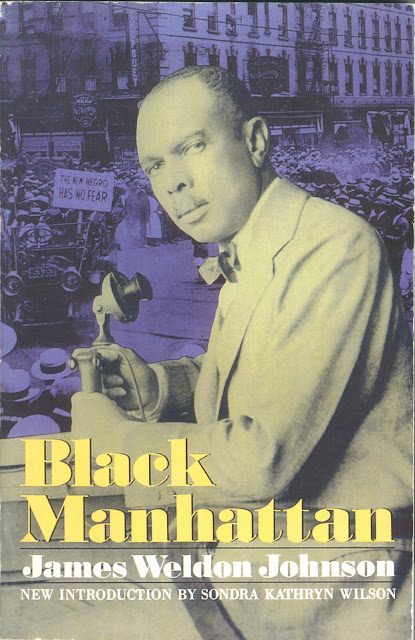
„Black Manhattan“ James Weldon Johnson (Da Capo Press, 1991)

Obrázek
In this classic work, first published in 1930, James Weldon Johnson, one of the leading lights of the Harlem Renaissance, combined the skills of the historian, social scientist, and the reporter to trace the New York black experience from the earliest settlements on Chatham Square during the pre-revolutionary period to the triumphant achievements of Harlem in the 1920s. But Black Manhattan is by no means simply history; It illuminates Johnson and his contributions to both black literature and black organizations; it provides us with an intimate account of the black theatrical and musical world of which Johnson had been a part; and it raises searching questions about the black people's struggle to find their identity. Black Manhattan remains one of the essential books on the black American experience, losing none of its resonance and value after many decades.  

„Writings" James Weldon Johnson (The Library of America, 2004)

Obrázek
The Autobiography of an Ex-Colored Man (1912), James Weldon Johnson’s first book and the first modernist novel written by an African American, is a groundbreaking and subtle account of racial passing, initially published as an anonymous memoir. Its veracity—many believed it to be a genuine autobiography—has made it one of the undisputed masterpieces of African American literature and established Johnson in the African American literary vanguard of the first half of the twentieth century. He was also one of the central figures of the civil-rights struggle of his era, a tireless activist and longtime leader of the NAACP. Until now, however, his innovative and fascinating writings have never been gathered in a one-volume edition. Johnson’s complex career spanned the worlds of diplomacy (as a U.S. consul in Venezuela and Nicaragua), politics (as secretary of the NAACP), journalism (as the founder of one newspaper and longtime editor of another), and musical theater (as lyricist for the ...