Populární příspěvky z tohoto blogu
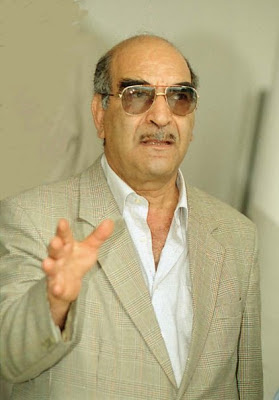
Mohammed Abed al-Jabri "Avoid the hudud Penalties when in Doubt" *
Since the modern Arab Awakening, which soon swept across the entire Muslim world, with the efforts of Jamal al-Din al-Afghani (d. 1897CE) and Muammad ‘Abduh (d. 1905CE), the Muslim masses have used the slogan of ‘application of Islamic shariah´ to propound to the masses, the alternative which they hoped would take them to the enjoyment of a free and honourable life. Every member of the Muslim masses, all over the world, aspires to the day when Islamic shariah will be applied in a manner that can remove political and social injustice, realize freedom and dignity for the human being, and pave the way to good deeds and noble conduct in order for these principles to become the bases of life in Islamic society, nay, in the whole of human society.
"Five tracts of Hasan Al-Banna (1906-1949): A selection from the Majmuat rasail al-Imam al-shahid Hasan al-Banna" Translated by Charles Wendell (University of California, 1978)
Hasan Al-Banna preceded with his work and thus left an imprint on many attempts in the years between the two wars, and especially after the Second World War, to constitute an Islamic order as the supreme political and social ideal. The publication under review contains his five studies translated into English by well-known Arabist and historian Charles Wendell. These are his most often cited essays - Between Yesterday and Today, Our Mission, To What Do We Summon Mankind?, Toward The Light and On Jihad. The main idea is always oriented toward the creation of an Islamic order (an-nizam al-islami). Hasan Al-Banna sees in Islam the only teaching that can ensure social progress and well-being and that is the key to the resolving of all basic problems of mankind. In the above-mentioned essays he tries to explain why, in his opinion, the establishment of an Islamic order is inevitable. According to his concept, there is only one valid law, namely the law of God that has to be impl...
"Člověk s léty nabývá tváře, jakou si zaslouží" Ernesto Sabato (1963)
"A tak jako každý člověk s léty nabývá tváře, jakou si zaslouží (neboť ta se modeluje nejen z jeho masa, ale i ducha, odvahy a zbabělosti, ušlechtilosti i bídy), naše vlast konečně dostává ve své zralosti tvář, jakou měla mít, tvář, kterou jsme jí všichni a každý z nás vtiskli do živého těla: politici či ryzí umělci, kuplíři i počestní otcové rodin, milionáři i nádeníci, ateisté i věřící. Takže můžeme-li se všichni dovolávat jejích ctností, nikdo nemůže tvrdit, leda ničema, že nenese vinu za její neduhy." Ernesto Sabato zdroj: "Spisovatel a jeho přízraky" Ernesto Sabato (1963, česky 2002), s. 121 Audiokniha (120 min), čte Jan Vlasák
"Malcolm X: The Great Photographs" (Stewart Tabori & Chang, 1993)
The face of Malcolm X (1925-1965) has become a cultural icon. Depending on who is looking, his image conjures up various men: moral leader, black separatist leader, Black Muslim teacher, radical leader, pan-Africanist leader, pioneer in the spread of orthodox Islam. Malcolm X: The Great Photographs is an extensively researched collection of historical photographs of Malcolm X beginning with his childhood and focusing on the critical years 1959 to 1965, when he was in the public eye. The photographs, arranged chronologically, tell the story of Malcolm's mature life.